After leaving Kuala Lumpur, one question stayed with me: were we, throughout the conference, actually speaking about the same thing when we used the term ‘public theology’?
I am not a scholar of public theology. I attended primarily as a practitioner who has spent many years involved in cross-cultural Chinese ministry, hoping to listen to what Chinese churches in different settings are now trying to understand and address. When I looked back through my notes afterwards, I did not find a definition becoming steadily clearer. Instead, I found a series of questions growing larger. Perhaps that was the conference’s greatest value for me.
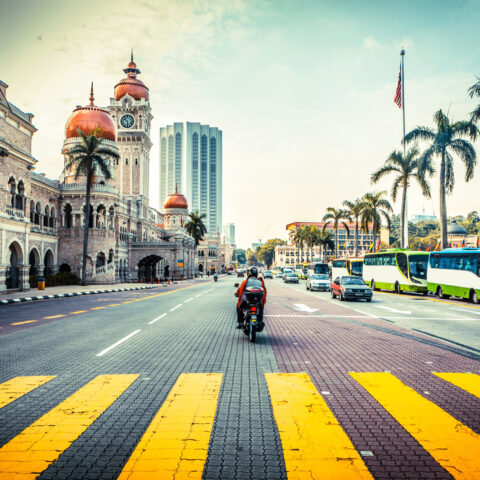
Kuala Lumpur itself made those questions concrete. Languages, religions, and ethnic communities exist alongside one another in the same city. ‘Multiculturalism’ is not an abstract proposition there; it is part of the daily reality people must learn to inhabit. The conference took multiculturalism as its theme, but in one sense it was not the papers in the meeting room that questioned us first. It was the city.
1. Were We Speaking about the Same ‘Public Theology’?
The speakers did not all approach public theology in the same way. Some began with political participation, others with social ethics, while still others approached it through mission, contextual theology, ecclesial practice, or public witness. There is no need to resolve these differences too quickly. They may simply indicate that Chinese public theology is still taking shape: we have recognized the importance of the questions, but we have not yet developed a sufficiently shared vocabulary.
Dr. Easten Law’s reflections on theology among diasporic Chinese Christians drew my attention especially to the complexity of the term ‘Sinophone’. Christians in mainland China, Hong Kong, Taiwan, Malaysia, and the wider Chinese diaspora may share elements of cultural memory, yet they inhabit very different historical, political, and social realities. If that is so, can we still assume too easily that there is a single, coherent ‘Chinese context’? Before rushing to construct a Chinese public theology, perhaps we first need to learn how to listen: how do different Chinese-speaking communities understand their public situations, and how do they discern the responsibilities of faith within them?
This led me to wonder whether the task of Chinese public theology is not simply to formulate a distinctively ‘Chinese’ body of theory, but first to develop a theological method capable of acknowledging difference and sustaining dialogue. If we cannot take seriously the diversity within the Chinese-speaking world itself, public theology may simply universalize the experience of one particular setting.
2. Is Publicness Determined by Context, or by the Church’s Identity?
One underlying assumption surfaced repeatedly at the conference: societies with more open public spaces are more conducive to public theology, while public theology is less able to develop where public space is more restricted. I understand the realities behind this judgement, but I think it requires greater caution.
Public space certainly shapes the form of the church’s witness, but it does not necessarily determine whether the church has a public vocation. The church’s public character does not arise first from a right to speak granted by political institutions; it arises from the identity it has received in Christ. Different political and social environments will produce different forms of expression, but different forms do not imply different missions. In one place, public witness may take the form of open advocacy. Elsewhere, it may be expressed through sustained accompaniment, professional service, repaired relationships, honest work, and the patient cultivation of a shared life. Bible may not speak directly into how these situations could be handled, but we do see a rich body of stories and testimonies throughout the Bible.
For this reason, I am increasingly reluctant to equate public theology simply with visibility or with speaking in political space. Public witness certainly includes speech, but it is not confined to speech. It is also revealed in how the church exists, serves, exercises power, treats the vulnerable, and sustains an alternative form of common life under unfavorable conditions.
3. What Public Imagination Do Salt and Light Offer?
Throughout those days, Jesus’ words about salt and light kept returning to me. I had often treated the two images as broadly parallel, but this time I became more aware that they portray distinct forms of public witness.
For many Asians, salt first evokes not preservation but the dining table. Salt does not draw attention to itself, yet it enters the whole dish and changes its flavor. If this image informs the church’s public role, the point may not be to occupy the center of society’s stage, but to exert influence through real and sustained participation in the life of a community. Salt suggests presence, permeation, and shared responsibility.
Light is different. Light does not permeate; it discloses. It makes visible what was previously obscured and enables people to recognize direction. If salt speaks of being present with the world, light reminds the church that it cannot merely repeat the explanations the world has already accepted. It must discern reality afresh from the gospel.
There is also a tension between salt and light. Salt without light may allow participation gradually to become assimilation. Light without salt may reduce witness to a declaration lacking relationship and credibility. If public theology is to enter the life of the church, it must hold both together: a genuine entry into society, and a gospel vision able to name reality differently.
4. If Public Theology Is More than a Discipline, What Else Must It Become?
In his conference address, Reverend David Doong identified three gaps—or forms of disconnection—facing Chinese public theology: the disconnection between spiritual formation and public witness; between theological theory and theological practice; and between academic research and the life and practice of the church. These gaps are closely related. If personal faith never enters public life, theology easily remains private. If theory cannot generate practice, public theology becomes little more than conference language. If academy and church remain separated, scholarship may lose contact with concrete realities, while the church may lack adequate tools for reflection.
I found myself wanting to add a fourth gap: the gap between Scripture and the interpretation of reality. We often begin by understanding the world through news, social media, political loyalties, or cultural analysis, and only then turn to Scripture for a response. In that pattern, Scripture risks becoming a spiritual supplement to an account of reality already formed elsewhere, rather than the governing narrative through which reality itself is perceived. If public theology is truly theology, Scripture should do more than inform our response to the world; it should school our attention, shape our judgement, and teach us what we are seeing.
This, in turn, raises a broader question about the nature of public theology itself. Andrew Chiang, though not physically present at the conference, continued to share reflections on public theology through Facebook, and one question prompted by his posts has remained with me: is public theology primarily a new academic discipline, or is it a way of seeing and inhabiting reality? I increasingly incline towards the latter. Rigorous scholarship remains indispensable, but its purpose is not merely to generate another field of study. It should help form communities capable of discernment—communities in which Christians learn to read their contexts through Christian perspective and to act faithfully within churches, workplaces, education, media, the arts, technology, and family life.
This also suggests that, if Chinese public theology is to move beyond academic discussion, its future conversations will need a wider range of participants. Alongside theologians and church leaders, they should include social scientists, educators, business and professional people, artists, younger Christians, and those who have served for years within particular communities. Academic conferences remain important, but they may be only one part of a much larger conversation.
When I left Kuala Lumpur, I did not carry away a more complete definition. I carried away several clearer questions. Perhaps what Chinese public theology most needs at this stage is not an early rush towards conclusions, but the cultivation of a shared capacity for discernment: listening to one another across different contexts, learning again to see reality through Scripture, and attempting faithful forms of public witness in the concrete circumstances of life.
Chinese churches now live within different nations, cultures, and political systems. The issues we face will not be identical, and our forms of witness will not be uniform. Yet Jesus’ calling to his disciples remains unchanged: to be salt, entering the world; and to be light, enabling people to see.
This may not be the conclusion of Chinese public theology. Perhaps it is simply a more honest place to begin.