Faith Beyond Institutions
What happens to faith when the structures that once sustained it become uncertain?
In-depth academic and theological research.
What happens to faith when the structures that once sustained it become uncertain?

The public witness of the church is not to win political power or cultural hegemony in this “competition of gods.” Rather, it is to imitate Christ, seeking the peace of the city in exile, living out embodied love in the virtual, and witnessing to the eternal kingdom in suffering.
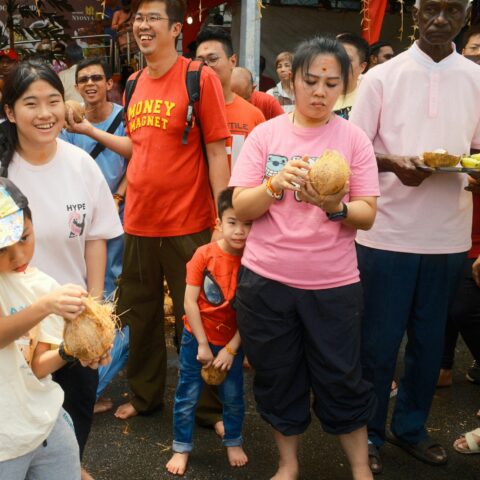
Can the Malaysian Chinese Church shift from a community primarily concerned with its own survival to one that participates in the holistic mission of God and seeks the peace of this land?

In a context where public space is restricted and church institutionalization is still taking shape, the “community of virtue” reminds the Chinese house church that public theology is not only about how the church speaks to the world, but also about whether the church itself lives out a life of peace, justice, humility, and mutual service.

Peace in Chinese culture, for example, often means requiring others to be the same as oneself, whereas biblical peace means being able to live with people who are different.

The phenomenon of child prostitution is closely related to human trafficking, the collapse of social values, poverty in Indigenous families, and the violence and inhumanity of the sex industry.
What kind of face does the church present in public? Do our tone and rhythm make people willing to approach us, and do they make us easier to understand?

Long before the word “Trinity” was rendered into Chinese as sanwei yiti (三位一體), Christians in Tang China were already searching for language to express the mystery of Father, Son, and Holy Spirit.

True formation is an inner checkup, a slow realization that our Heavenly Father has a specific plan and timing for us as we shift toward a life where God is truly first.

My most important rebuttal is that Yeo’s review has misunderstood my main goal. Rather than offering a Pentecostal reading of Chinese Christianity, I employ what I call ‘Pentecost historiography.

Looking back at history, we can see the importance of Chinese-language text ministries—and later digital ministries—in outreach to the Chinese diaspora outside China.

Migration is now a global phenomenon. It is estimated that 200 million people live outside their countries of origin, voluntarily or involuntarily.